

Bandiautosupply

What Is Loan APR?

By Marcus VanceLoans

What Is Loan APR?

Borrowing money is a cornerstone of modern financial life. Whether you are financing the purchase of a family home, buying a reliable vehicle to get to work, consolidating high-interest debt, or opening a new credit card, credit provides the immediate capital necessary to achieve major life milestones. However, entering into a borrowing agreement requires a clear understanding of how loan costs are calculated. Many borrowers make the mistake of evaluating financing offers based solely on the advertised interest rate, overlooking the true, total cost of the debt.

When shopping for any credit product, the most critical metric for evaluating affordability is the APR, which stands for Annual Percentage Rate. Understanding what APR means, how it differs from a nominal interest rate, what fees are factored into the calculation, and why comparing APRs is essential will save you thousands of dollars over the lifetime of your loan. This comprehensive guide breaks down the mechanics of APR, explores fixed versus variable structures, and equips you with the knowledge needed to borrow wisely.

The Fundamental Definition of Loan APR

To understand APR, you must first recognize that borrowing money always carries a cost. Lenders do not lend capital out of goodwill; they charge for the risk and the opportunity cost of parting with their funds.

The Annual Percentage Rate (APR) represents the true, total yearly cost of borrowing money, expressed as a percentage. Unlike a simple interest rate which only measures the cost of borrowing the principal balance the APR provides a comprehensive picture by combining the nominal interest rate plus all mandatory upfront financing fees and administrative charges required to secure the loan.

Why APR Was Created

Before consumer protection laws were enacted, lenders could advertise deceptively low interest rates while burying thousands of dollars in hidden application fees, origination charges, and broker commissions. Borrowers would sign agreements believing they secured a great deal, only to discover their actual monthly obligations and closing costs were significantly higher than anticipated.

To eliminate this confusion, regulatory frameworks (such as the Truth in Lending Act in the United States) mandated that all lenders calculate and disclose the APR using standardized formulas. This standardization allows consumers to compare competing loan offers from different financial institutions on an equal, apples-to-apples footing.

APR Versus Nominal Interest Rate: What Is the Difference?

One of the most common points of confusion in personal finance is distinguishing between the nominal interest rate and the APR. While both are expressed as percentages, they measure two entirely different financial realities:

  • Nominal Interest Rate: This is the baseline cost of borrowing the principal amount. It determines how much interest accumulates on your remaining balance during each billing cycle. It does not account for any administrative overhead, origination fees, or closing costs.

  • Annual Percentage Rate (APR): This is a broader, more inclusive metric. It incorporates the nominal interest rate plus all mandatory financing fees rolled into an annualized percentage figure. Because it includes these extra expenses, the APR is almost always higher than the nominal interest rate on any given loan.

A Practical Real-World Example

Imagine you are shopping for a personal loan of $15,000 to consolidate high-interest credit card debt, and you are comparing two competing lenders:

  • Lender A: Offers a nominal interest rate of 6.0% with an upfront lender origination fee of $600.

  • Lender B: Offers a nominal interest rate of 6.5% with zero origination fees.

At first glance, Lender A appears superior because its nominal interest rate is half a percent lower. However, when you factor in the $600 origination fee required by Lender A, its APR will likely be higher than Lender B's.

If you plan to keep the loan for its entire multi-year term, Lender A's lower interest rate might eventually offset the upfront fee. But if you plan to pay off the loan early, Lender B's zero-fee structure makes it the significantly cheaper option. This scenario illustrates why evaluating the APR rather than just the headline interest rate is critical for your financial health.

What Fees Are Included in an APR Calculation?

To understand why the APR is higher than the nominal interest rate, you must examine the specific types of fees that lenders are legally required to factor into the calculation. While exact rules vary by loan product, common inclusions consist of:

  • Lender Origination Fees: Upfront administrative charges assessed by banks or online lenders to process your loan application, verify your documents, and underwrite the credit.

  • Broker Fees: Compensation paid to a loan broker or intermediary who facilitates the connection between you and the lending institution.

  • Closing Costs and Legal Fees: Administrative, title search, or attorney fees associated with finalizing secured loans like mortgages.

  • Mortgage Insurance Premiums: Required insurance policies (such as Private Mortgage Insurance or government-backed insurance) mandated when borrowers secure high-loan-to-value mortgages.

  • Discount Points: Upfront fees paid directly to the lender at closing in exchange for a permanently lower interest rate over the life of the loan.

Conversely, fees that are not included in the APR typically consist of third-party charges that would be incurred regardless of which lender you choose, such as standard home appraisal fees, credit report pull fees, or penalties for late payments.

Fixed APR Versus Variable APR

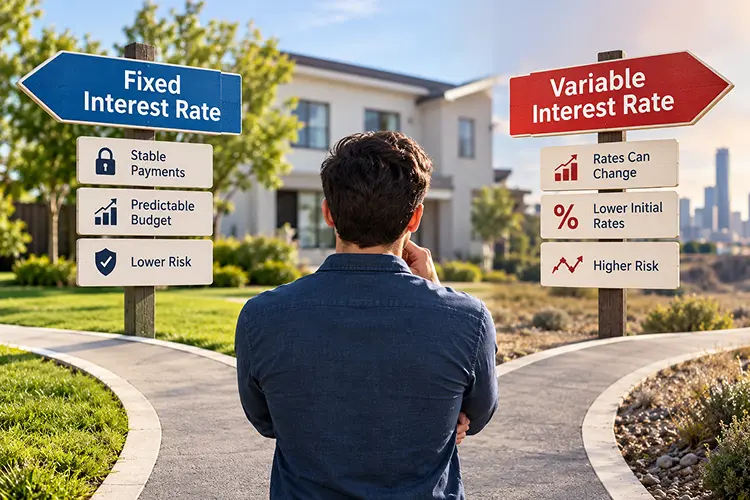
Depending on the credit product you choose, your APR will generally fall into one of two structural categories, each carrying distinct implications for your monthly budget:

1. Fixed APR

A fixed Annual Percentage Rate remains completely locked and constant for the entire duration of your loan term. Once your agreement is finalized, the rate established on day one will not change, regardless of how drastically broader economic conditions, inflation, or central bank benchmark rates fluctuate.

  • Budget Predictability: Because your interest rate never changes, your payment obligations remain identical every single month. This provides absolute stability for long-term financial planning.

  • Best Used For: Long-term financing commitments such as 15-year or 30-year mortgages, auto loans, and fixed-term personal loans where payment shock must be avoided.

2. Variable APR

A variable Annual Percentage Rate (sometimes called an adjustable or floating rate) can fluctuate periodically over the life of the loan based on changes in an underlying economic benchmark index, such as the U.S. Prime Rate or the Secured Overnight Financing Rate.

  • Market Exposure: Your loan establishes a starting rate pegged to a benchmark index plus a lender markup (the margin). When benchmark rates rise or fall, your APR adjusts accordingly, altering your monthly costs.

  • Initial Attraction: Variable-rate products often feature lower introductory rates than fixed-rate options, making them attractive for short-term borrowing or for borrowers who plan to pay off the debt rapidly.

  • Best Used For: Short-term loans or credit lines where you can aggressively pay down the balance before benchmark rates have an opportunity to climb significantly.

How APR Applies Across Different Loan Products

The significance and calculation of APR vary across different sectors of personal finance. Understanding how APR manifests in specific lending categories helps you evaluate each product accurately:

Mortgages

When buying a home, the APR is your primary regulatory tool for comparing mortgage offers. Because mortgages involve substantial closing costs, origination fees, and discount points, looking exclusively at the nominal note rate can be misleading. A mortgage with a slightly higher interest rate and zero closing costs may yield a lower APR and cost less out of pocket than a low-rate mortgage loaded with thousands of dollars in upfront fees.

Personal Loans and Auto Financing

For installment loans, the APR reflects the annualized cost of your monthly Equated Monthly Installments (EMIs). Because these loans are amortized, the APR incorporates any administrative origination fees deducted from your loan disbursement. If you borrow $10,000 but the lender deducts a $300 origination fee, you only receive $9,700 in cash while paying interest on the full $10,000 a dynamic that is fully captured and reflected in the higher APR.

Credit Cards and Revolving Lines of Credit

Unlike fixed-term installment loans, credit cards do not have a fixed end date. Consequently, credit card APRs apply to revolving balances. Issuers divide your annual APR by 365 to establish a daily periodic rate, compounding interest daily on unpaid balances. Credit cards also feature multiple types of APRs, including standard purchase APRs, penalty APRs triggered by missed payments, and cash advance APRs that carry zero grace periods and exceptionally high rates.

Strategic Ways to Secure a Lower APR

Because your APR directly dictates the total cost of borrowing, minimizing your APR should be a primary objective whenever you apply for credit. Lenders determine your personalized APR based on your financial profile, creditworthiness, and perceived risk. You can take actionable steps to optimize your profile and secure lower rates:

  1. Maintain a High Credit Score: Lenders reserve their lowest APRs for borrowers with exceptional credit scores (typically 740 and above). Pay all bills on time, keep your credit utilization ratio low, and regularly review your credit reports for errors.

  2. Lower Your Debt-to-Income Ratio: Underwriters examine your monthly debt obligations relative to your gross monthly income. Paying down existing revolving debts improves your debt-to-income ratio, signaling financial stability and reducing lender risk.

  3. Offer Substantial Collateral or Down Payments: For secured loans like mortgages or auto loans, making a larger down payment reduces the lender's risk exposure, allowing you to qualify for more favorable APR tiers.

  4. Shop Around and Compare Multiple Offers: Never accept the first financing offer you receive. Obtain pre-qualification quotes from multiple traditional banks, credit unions, and online lenders to compare APRs, origination fees, and repayment terms.

  5. Settle Debts Quickly: If you utilize variable-rate credit products, prioritize paying off balances rapidly to minimize your exposure to potential macroeconomic rate hikes.

Summary Action Plan for Borrowers

  1. Always Compare APR, Not Just Interest Rates: When evaluating loan offers, look past the headline interest rate and examine the APR column to capture all mandatory administrative fees.

  2. Factor in Your Time Horizon: If you plan to pay off a loan early, evaluate whether paying upfront fees for a lower interest rate makes financial sense compared to a zero-fee alternative.

  3. Protect Your Credit Profile: Maintain disciplined budgeting habits and stellar credit scores to consistently unlock the lowest available APR tiers across all lending markets.

Share
What Is Loan APR? Annual Percentage Rate Definition & Guide | Bandiautosupply