

Borrowing money is a major financial milestone for millions of individuals. Whether you are financing your first family home, purchasing a reliable vehicle to commute to work, or taking out a personal installment loan to consolidate high-interest debt, securing a loan provides the immediate capital necessary to achieve important life goals. However, signing a promissory note is only the first step in the borrowing lifecycle. Once the funds are deposited into your account, you enter the repayment phase. Understanding how loan payments and Equated Monthly Installments work is crucial for maintaining your credit health, avoiding unexpected financial stress, and minimizing the total cost of your borrowing experience.
Many borrowers focus exclusively on securing loan approval and receiving the cash, often overlooking the internal mechanics of how their monthly payments are structured. When you make a standard payment on an installment loan, your money does not simply disappear into a generic debt pool. Instead, every single payment is split internally between paying down your remaining principal balance and covering accumulated interest charges. Furthermore, lenders utilize structured amortization schedules to determine how much of your payment goes toward each component over time. This comprehensive guide breaks down the anatomy of a loan payment, explains how installment structures work, explores amortization, and provides actionable strategies to help you manage your debt efficiently without complex mathematical formulas getting in your way.
Understanding the Core Components of a Loan Payment
To master your debt repayment strategy, you must first understand what happens to your money after you hit submit on your monthly payment. Every standard monthly loan installment is composed of two primary financial elements: principal and interest.
The Principal: This represents the actual remaining balance of the money you originally borrowed from the lender. Every dollar that is allocated toward the principal permanently reduces your total debt obligation, bringing you one step closer to complete financial freedom.
The Interest: This is the cost charged by the lender for the privilege of borrowing their capital. It is calculated as a percentage of your outstanding principal balance during each billing cycle.
Understanding this split is essential because the proportion of your monthly payment allocated to principal versus interest changes dramatically over the lifetime of a standard consumer loan.
The Anatomy of an Installment Loan and Fixed Payments
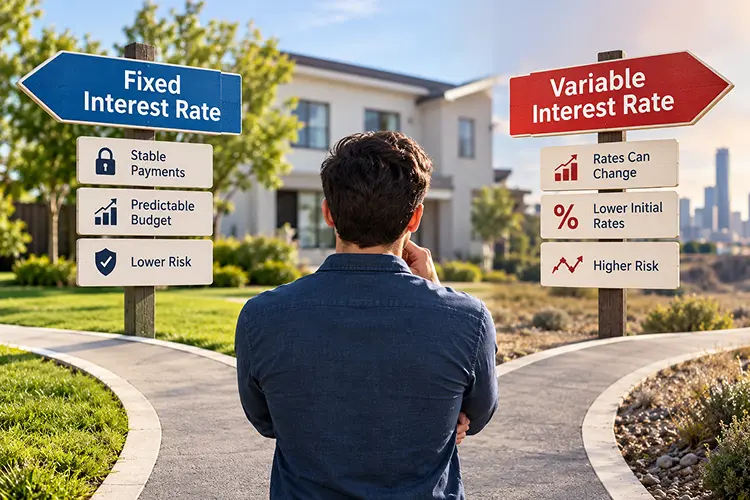
Most traditional consumer financing such as mortgages, auto loans, and standard personal installment loans relies on fixed monthly payments. In many financial markets, this fixed monthly obligation is referred to as an Equated Monthly Installment, or EMI.
The word equated means that your total out-of-pocket payment amount remains identical every single month for the entire duration of your loan term. If your monthly obligation is set at five hundred dollars, you will pay exactly five hundred dollars in month one, month twelve, and the final month of your agreement. This predictability makes budgeting much easier, as you always know exactly how much cash flow to reserve for your debt obligations.
However, while your out-of-pocket payment remains constant, the internal distribution of that payment shifts dynamically with every billing cycle. Lenders achieve this consistent payment amount through a structured accounting process known as amortization.
How Amortization Shapes Your Repayment Journey
Amortization is the process of spreading out a loan into a series of fixed monthly payments over a predetermined period, such as a three-year auto loan or a thirty-year mortgage. Under an amortization schedule, the lender structures your payments so that the loan is completely paid off by the final due date, with all accumulated interest fully cleared.
The most important characteristic of an amortized loan is how interest is front-loaded into the beginning of the term:
Early in the Loan Term: During the initial months and years of your loan, your outstanding principal balance is at its absolute highest. Because interest is calculated directly against your remaining balance, the interest charge for the month is very large. Consequently, a massive majority of your fixed monthly payment goes toward paying off accrued interest, while only a small fraction chips away at the principal balance. This is why looking at your loan statement early on can feel discouraging, as your total balance decreases very slowly.
Later in the Loan Term: As time passes and you continue making steady monthly payments, your outstanding principal balance gradually shrinks. Because the principal balance is smaller, less interest accumulates during each subsequent billing cycle. As a result, a progressively larger portion of your fixed monthly payment goes directly toward reducing the principal balance, accelerating your progress toward zero debt.
The Real-World Impact on Your Finances
Understanding amortization explains why making extra principal payments early in a loan's lifecycle has such a massive financial impact. If you receive a bonus or tax refund and apply it toward your principal balance during the first or second year of a loan, you shrink the base upon which all future interest is calculated. This simple action can shave years off your loan term and save you thousands of dollars in total borrowing costs.
Alternative Repayment Structures: Revolving Credit Versus Installment Loans
It is important to distinguish between fixed installment loans and revolving credit lines, as their repayment mechanisms operate very differently:
Installment Loans: These feature fixed loan amounts, fixed repayment terms, and fixed monthly installments (EMIs). Once you pay off the balance, the account is closed, and you cannot borrow against it again without applying for a new loan. Examples include auto loans and mortgages.
Revolving Credit: Credit cards and lines of credit do not have a fixed repayment schedule or end date. You borrow up to a predetermined credit limit, make variable monthly payments based on what you spend, and the credit becomes available to spend again as you pay down the balance. Revolving credit lines typically compound interest daily rather than calculating it through a fixed monthly amortization schedule.
Strategic Approaches to Manage and Optimize Your Loan Payments
Managing your debt effectively requires proactive planning rather than passive acceptance of your monthly bills. Implementing smart repayment strategies can protect your cash flow and reduce the total cost of borrowing:
1. Make Prepayments Whenever Possible
Because traditional installment loans front-load interest charges, paying down extra principal early in the term yields the highest return on investment. Check your loan agreement to ensure there are no prepayment penalties, and designate extra cash windfalls toward principal reduction.
2. Balance Term Length with Monthly Affordability
When shopping for a loan, lenders often tempt borrowers with longer repayment terms because they yield a lower monthly payment. While a longer term makes each month's bill more affordable, it dramatically increases the total amount of interest you will pay over the life of the loan. Whenever your monthly budget allows, opt for the shortest repayment term you can comfortably afford.
3. Automate Your Monthly Payments
Missing a loan payment triggers late fees, damages your credit score, and can result in severe financial penalties. Setting up automatic bank transfers for your monthly payment due date eliminates human error and guarantees that your obligations are always met on time.
4. Communicate with Lenders During Hardship
If you experience an unexpected job loss, medical emergency, or income disruption, contact your lender immediately before missing a payment. Most reputable financial institutions offer hardship programs, temporary payment deferrals, or loan modification options designed to protect your financial standing during difficult times.
Summary Action Plan for Debt Success
Review Your Loan Agreement: Examine your current loan terms to understand your interest rate, remaining term, and whether your loan uses standard monthly amortization.
Prioritize High-Cost Debt: If you are managing multiple debts simultaneously, allocate surplus cash toward accounts carrying the highest interest rates first.
Automate and Monitor: Set up autopay for all fixed monthly installments to protect your credit score and maintain absolute consistency in your financial life.