For many retirees, deciding when to claim Social Security is one of the biggest financial decisions they will make. While claiming benefits early can provide income sooner, waiting until age 70 can significantly increase the monthly benefit for the rest of your life.
Why Waiting Can Increase Your Benefit
Your Social Security benefit depends partly on when you begin claiming it.
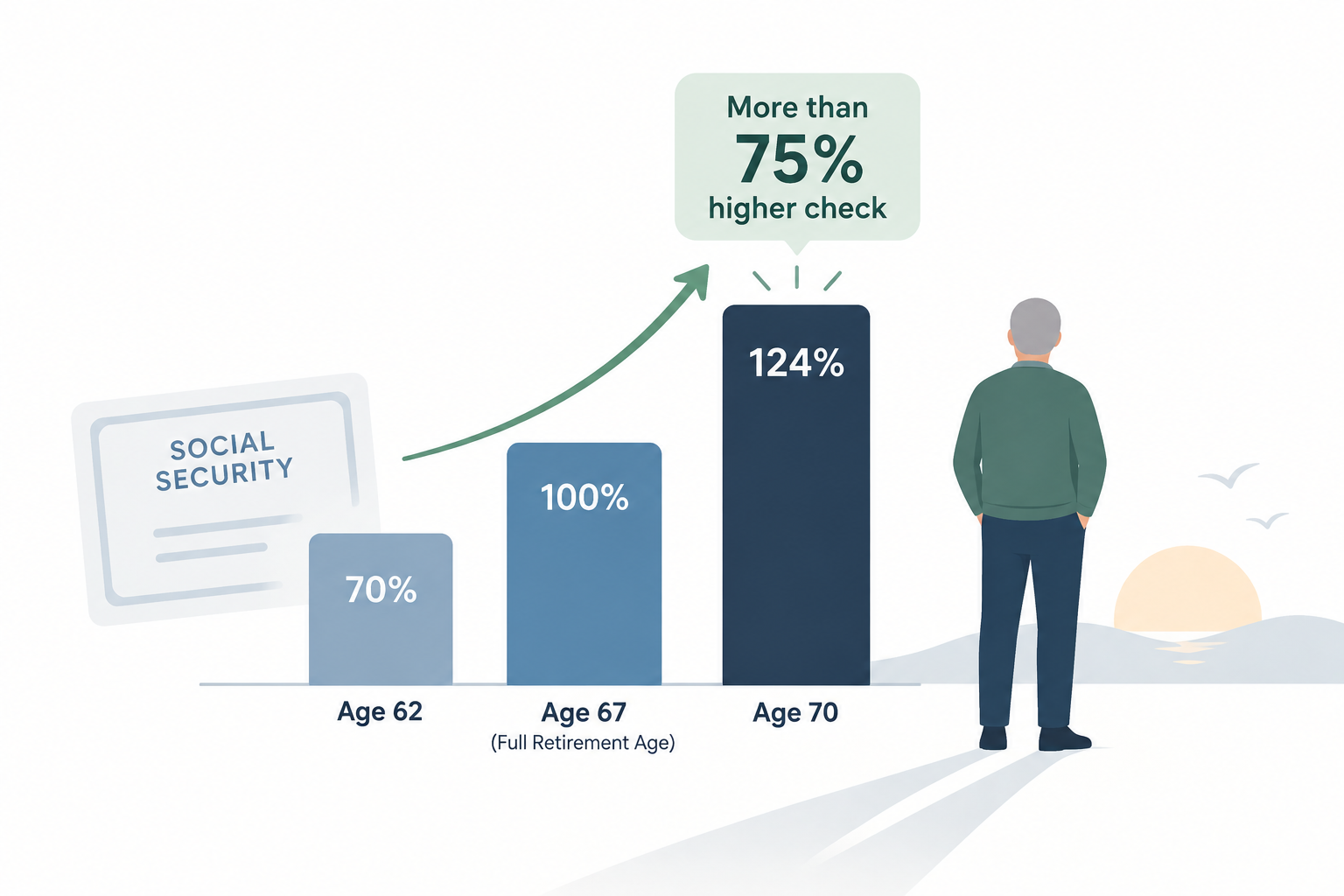
For someone whose full retirement age is 67, claiming at age 62 can reduce the benefit to about 70% of the full retirement benefit. Waiting until age 70 can increase the benefit to 124% of the full retirement benefit because of delayed retirement credits.
That means the monthly benefit at 70 can be roughly 77% higher than the benefit available at age 62.
Because cost-of-living adjustments are applied to the benefit, receiving a larger starting benefit can also create a larger dollar amount when future adjustments are applied.
The Biggest Challenge Is Covering the Gap
The main difficulty with delaying Social Security is paying for your living expenses between your early 60s and age 70.
Some people may cover this period by:
- Continuing to work
- Using taxable investment accounts
- Drawing from retirement savings
- Combining income from work and savings
Using retirement savings during your 60s while allowing your Social Security benefit to grow can be one approach to consider. Your individual tax situation, however, can affect which strategy makes the most sense.
Married Couples Have Another Consideration
Delaying Social Security can be particularly important for married couples when one spouse is the higher earner.
If the higher-earning spouse delays benefits, the larger benefit can potentially provide a larger survivor benefit to the spouse who lives longer.
This makes the claiming decision more than just a question of how much money you receive each month. Your decision can also affect your spouse’s financial security later in life.
When Claiming Earlier May Make Sense
Waiting until 70 isn’t automatically the best choice for everyone.
Claiming earlier may make more sense if:
- You have serious health concerns
- You have a shorter expected retirement period
- You need the income immediately
- Social Security is your primary source of retirement income
- You don’t have enough savings to comfortably cover the waiting period
The value of delaying depends heavily on your health, finances, household situation, and ability to pay expenses while waiting.
Don’t Wait Past Age 70
Delayed retirement credits stop increasing your Social Security retirement benefit once you reach age 70. If you are considering delaying benefits, there generally isn’t a financial reason to continue postponing your retirement benefit beyond that age.
Before making a decision, review your Social Security statement and compare your estimated benefits at different claiming ages, such as 62, your full retirement age, and 70.
Seeing those three numbers side by side can make the potential difference much easier to understand.
Bottom Line
Delaying Social Security can provide a substantially larger monthly benefit and may be especially valuable for people who expect to live well into retirement.
However, the best claiming age is different for everyone. Consider your health, savings, income needs, taxes, and family situation before deciding when to claim.
Disclaimer: This article is for general informational purposes only and should not be considered financial or retirement advice. Social Security rules and individual benefits can vary. Review your personal situation and consider speaking with a qualified financial professional before making a retirement decision.